Climate Investments
California voters approved Proposition 4 in 2024, authored by Senator Allen, to authorize $10 billion for climate projects across the state. This is the largest investment in climate resilience in state history, and the second largest in U.S. history after the Inflation Reduction Act of 2022.
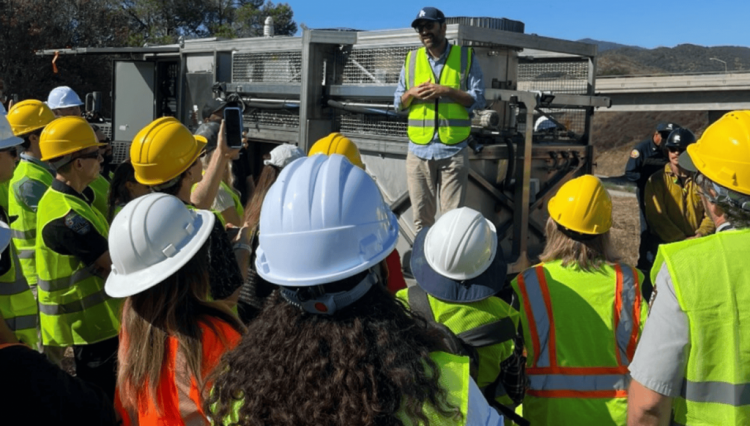
Senator Allen speaks to a crowd at the BurnBot demonstration.
As Chair of the Senate Budget Subcommittee 2 on Resources, Environmental Protection and Energy, Senator Allen helped finalize nearly $3.2 billion from Prop 4 in 2025. These investments include:
- Over $1 billion for drinking water projects in communities with a history of clean water challenges, and the restoration of watersheds and habitats threatened by drought;
- $400 million for wildfire resilience projects including brush clearance, home hardening, emerging technologies, and more;
- $400 million to support access to parks and the outdoors;
- $390 million to protect critical habitat and advance California’s 30x30 initiative;
- $275 million for clean energy and clean air investments;
- $267 million for coastal resilience projects that will protect vulnerable communities from the threat of sea level rise;
- Over $150 million for climate-smart agriculture advancements; and
- Nearly $110 million to prepare communities for extreme heat events.
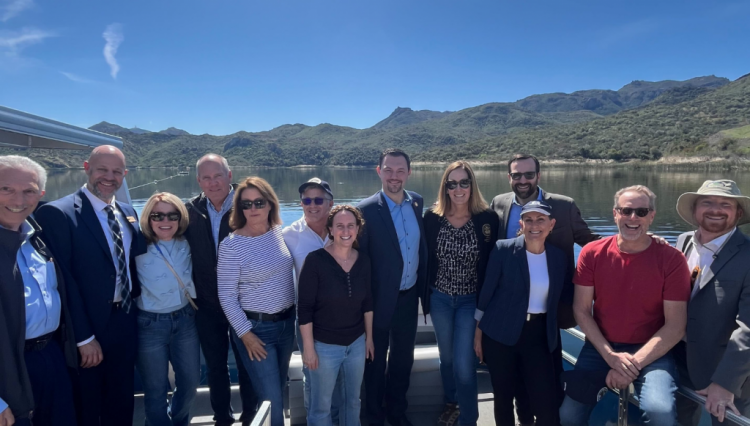
Group photo at OceanWell’s launch of their desalination pilot program in the Las Virgenes Municipal Water District reservoir.
California also reauthorized the landmark Cap-and-Trade Program (now Cap-and-Invest) which raises money from polluters to support a large array of projects that reduce greenhouse gas emissions across California, such as public transportation and clean energy projects.
Community Resilience and Insurance
California ratepayers have experienced increasingly higher insurance premiums and reduced options as climate change causes more severe weather events. The 2025 January fires were the latest example of how disasters are becoming increasingly catastrophic. Brief moments of heavy precipitation, followed by prolonged and more frequent periods of hotter and dryer conditions, set the stage for large scale events like the LA Fires.
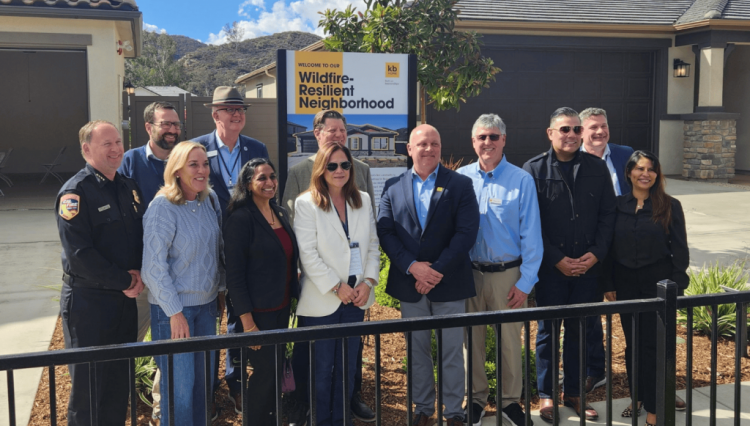
State and local leaders pose during a tour of a Fire Safe neighborhood and Escondido.
In order to stabilize insurance premiums while restoring the health of the insurance market, the Legislature spent much of 2025 focusing on reducing risk across communities through home hardening and defensible space policies.
California established the California Safe Homes grant program to facilitate investments for home hardening with a focus on insurance desert regions.
Safer from Wildfires establishes protocols and steps for property owners to best protect their own and neighboring structures. It simultaneously provides a path for individuals to receive better insurance coverage options through the private market, and the program will now be subject to more timely updates to its guidance to reflect the latest and greatest emerging practices and technologies.
Broader Insurance Reform
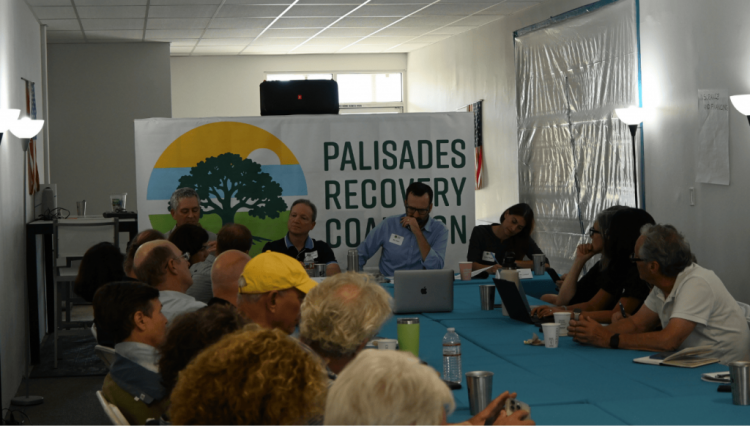
Senator Allen leads a roundtable conversation with the Palisades Recovery Coalition to discuss ongoing insurance issues.
The LA Fires highlighted lapses in the insurance market and led to significant measures to reform the industry more broadly.
- SB 495 (Allen) eases the burden on those recovering from a disaster by requiring insurers to pay 60% of a policyholder’s personal property (contents) coverage limits before requiring a detailed inventory of contents lost to a fire to receive the remainder of the coverage.
- AB 226 (Calderon) authorizes the FAIR Plan to access catastrophic bonds through the IBank in order to finance the costs of claims and support the financial stability of the insurer of last resort.
- AB 234 (Calderon) designates two legislators as non-voting, ex officio members of the FAIR Plan Governing Committee to increase oversight and transparency.
- AB 493 (Harabedian) requires lenders to pay a policyholder 2% interest on insurance proceeds that are held in escrow during ongoing construction.
- SB 525 (Jones) requires the FAIR Plan to insure manufactured and mobile homes under the same terms and conditions as basic property insurance sold for other residential dwellings.
- SB 547 (Pérez, Rubio) prohibits an insurer from canceling or refusing to renew a policy for a commercial property that is within or adjacent to a declared state of emergency, for one year after the declaration of emergency.
Senator Allen is currently working on legislation for 2026 to provide low-cost financing for home hardening projects and create more transparency with insurance products.